
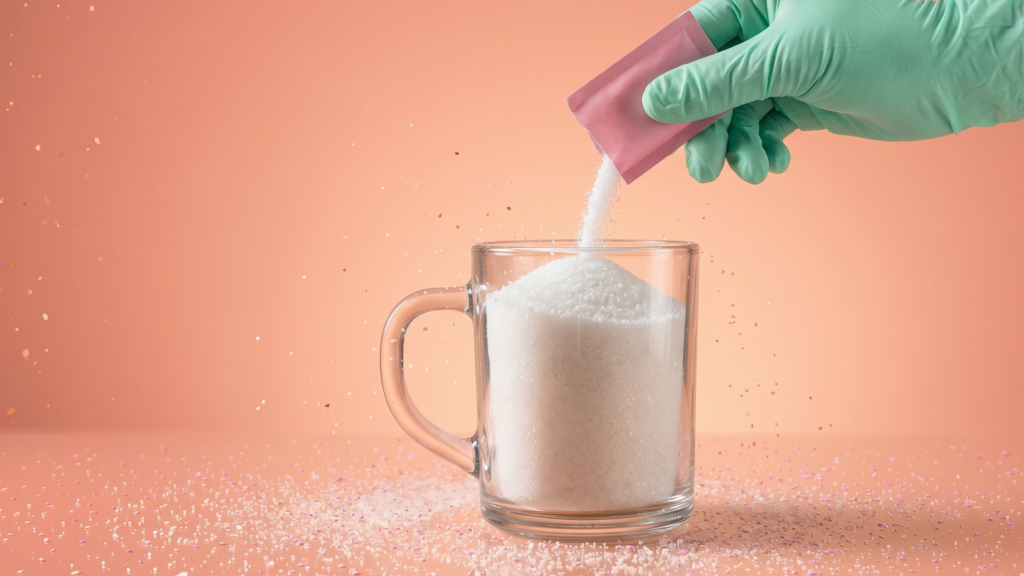
If you are trying to cut out real sugar, you’ve probably reached for the colorful “zero-calorie” packets or bought snacks labeled “sugar-free.” It feels like a health cheat code: all the sweetness, none of the guilt.
But if these alternatives are so good for you, why do artificial sweeteners make me feel sick? Why do they leave you feeling bloated, fatigued, and facing massive sugar cravings an hour later?
The short answer: Zero-calorie sweeteners are a biological trap. A study published in the International Journal of Molecular Sciences shows that fake sugars don’t bypass your system—they manipulate it.
Here is exactly what happens inside your body when you swap real sugar for chemicals, and the new choice that changes everything.
The Three Hidden Side Effects of Diet Sweeteners
1. They “Catfish” Your Brain
When you taste something sweet, your brain thinks energy (calories) is on the way. It signals your metabolism to get ready to burn fuel. But when you use a synthetic sweetener, the calories never show up. This creates severe confusion in your system. Your brain feels cheated, panics, and triggers intense hunger signals. That is why diet drinks actually make you crave real carbohydrates and sugar later in the day.
2. They Turn Friendly Gut Bacteria Pathogenic
Your stomach cannot absorb fake sugars. They travel straight down into your colon, where your gut microbiome lives. A recent landmark study found that popular artificial sweeteners (like sucralose and aspartame) cause normal, healthy gut bacteria like E. coli to mutate:
- The Shield: The bacteria stick together to form toxic walls called biofilms.
- The Attack: They turn aggressive and actively attack the delicate lining of your gut wall leading to chronic inflammation and poor digestion.
3. The Sugar Alcohol Bloat
Look at the label of your favorite “clean” or “keto” protein bar. If you see ingredients ending in “-ol” (like erythritol or xylitol), you are eating sugar alcohols. Because your small intestine can’t digest them, they sit in your stomach, pull in excess water, and ferment. This is the direct cause of the painful bloating, gas, and sudden running to the bathroom that people experience.
3. The Natural Sugar Lurker
Packaged monk fruit or stevia products are frequently blended with large amounts of erythritol because pure extracts are too concentrated for direct consumption. This filler creates a deceptive “natural” image, as consumers often ingest a significant amount of sugar alcohol rather than what’s promoted on the packaging.
Fake Sugar vs. Sweet Fiber
For decades, we’ve been told our only options are real sugar (which causes crashes) or fake sugar (which destroys your gut). But there is a third choice that is a common pantry staple that Korean moms and chefs reach for: sweet fiber syrup.
Instead of worrying about fake sugars, you can use a prebiotic sweetener that actually takes care of your microbiome.
| Sweetener Type | Gut Comfort | Taste & Texture | Health Risks |
| Fake Sugars (Sucralose, Aspartame) | Bad for Gut Lining | Thin Chemical Aftertaste | Linked to metabolic issues |
| Sugar Alcohols (Erythritol) | Gas & Bloating | Artificial Cooling Taste | Linked to cardiovascular risks |
TLDR
Are zero-calorie sweeteners bad for you?
Clinical studies advise against regular use of artificial sweeteners. While they don’t have calories, long-term studies from the World Health Organization (WHO) link them to higher risks of type 2 diabetes and heart issues, while molecular research shows they disrupt your gut barrier.
Why does erythritol cause bloating?
Erythritol is a sugar alcohol. Your body cannot fully absorb it, so it travels to your large intestine where it draws in water and can ferment rapidly, leading to acute gas, stomach cramps, and digestive distress.